Elden Ring
FromSoftware's most complete open-world soulslike yet: near-limitless freedom to explore and build your character, in exchange for a difficulty that never apologizes.
Overview
Few games of the past decade carried expectations as heavy as Elden Ring’s. Hidetaka Miyazaki — the mind behind Dark Souls, Bloodborne, and Sekiro — sat in the director’s chair, while George R.R. Martin, author of A Song of Ice and Fire, built out the world’s deep mythology. The result is the Lands Between: a continent that once flourished under Queen Marika, now shattered after the Elden Ring broke, with her demigod offspring hoarding the Great Runes and slaughtering each other for the throne.
You play as a Tarnished — an exile called back by grace to gather the Great Runes, mend the Elden Ring, and become Elden Lord. FromSoftware tells the story in the style that made it famous: no lengthy expository cutscenes, just a plot scattered across item descriptions, cryptic dialogue, and the ruins all around you. That “show, don’t tell” approach creates a depth few games can match, though it’s also a barrier for anyone expecting to understand the full story in their first few hours.
Gameplay Highlights
The biggest leap Elden Ring makes over its predecessors is its open-world structure. Instead of linear corridors, the Lands Between hands you sprawling regions — lush Limgrave, misty lake-covered Liurnia, the hellish red wastes of Caelid — and then barely restricts where you can go. The Sites of Grace guide you in place of quest markers, and Torrent, your loyal spectral steed, turns riding uphill into a sunset into a joy all its own. Behind every hill is a catacomb, a field boss, or an NPC with a secret, so the classic urge to “climb the highest point and look around” is always rewarded.
Combat keeps every soulslike principle intact: stamina management, frame-perfect dodges, memorizing each boss’s move set. Margit near the start of the game is infamous as the series’ entry exam, while Malenia, Blade of Miquella, remains one of the hardest bosses FromSoftware has ever built. The counterweight to all that severity is a surprisingly generous build system: colossal greatsword slams, glintstone sorcery, dragon-fire incantations, or bleed builds that drain enemy health bars in visible chunks. Ashes of War let you slot your favorite skills onto any weapon, and Spirit Ashes — Mimic Tear above all — let solo players push through fights that once felt impossible. That balance between stern and generous is exactly why every victory feels worth something.
Graphics and Sound
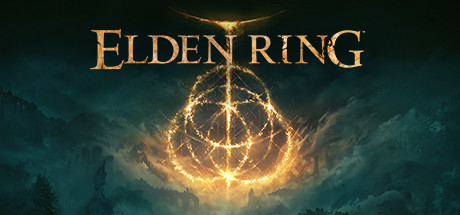
Elden Ring doesn’t win on resolution; it wins on art direction. The golden light of the Erdtree piercing the fog that blankets the map is both a navigation landmark and a painterly backdrop for every frame. Bosses are staged like cinema: from Godrick grafting other people’s limbs onto himself to the Radahn Festival — the series’ largest-scale battle, with arrows raining down and the score pounding away — these are moments players will still be recounting years from now. The music stays restrained while you wander the fields, then erupts into orchestral suites tailored to each boss, nowhere more memorably than in Malenia’s theme.
The PC version at launch, however, was plagued by severe stuttering even on high-end hardware and took months of patches to fully stabilize. On PS5 and Xbox Series X, the game holds a far steadier frame rate.
Long-Term Experience
A single playthrough runs 90 to 120 hours if you explore, and that’s just the first loop. New Game Plus carries your entire character over, and the 2024 Shadow of the Erdtree expansion opens up the Land of Shadow with roughly 40 hours of content and a boss roster that holds its own against the base game’s. Co-op summoning and PvP invasions still keep the community bustling. For build enthusiasts, replaying with a new weapon is essentially a new game. The biggest long-term weakness is the NPC quest system: quests can be permanently failed if you don’t take notes or consult a guide — a small blemish on an otherwise enormous package.
Verdict
Elden Ring isn’t for everyone, but for anyone willing to take the plunge, it pays back every minute invested: a vast world thick with secrets, boss fights that demand both skill and patience, and the pure euphoria of finally felling the enemy that’s killed you dozens of times. It’s the new benchmark for open-world design, and a mandatory entry on any “best games of the decade” list.
Pros
- A vast open world where nearly every corner gives you a reason to stop and look.
- Absurdly flexible build system — greatswords to sorcery, every playstyle is viable.
- Spectacular, fair boss design where every single win feels earned.
- Shadow of the Erdtree adds dozens of hours on par with the base game.
Cons
- Brutally hard, with no easy mode for newcomers to learn the ropes.
- The PC version launched in rough shape and needed months of patches to stabilize.
- NPC questlines are easy to permanently miss without a guide or diligent note-taking.