Hades II
Supergiant raises the roguelike bar again: more varied builds, denser content, and Greek-myth storytelling that never once coasts.
Overview
Hades II is that rare sequel to a game already praised as near-perfect. Supergiant Games — the studio behind Bastion, Transistor, and Hades — rarely makes sequels, yet they returned to Greek mythology anyway, this time with a new protagonist: Melinoë, Princess of the Underworld and sister of the first game’s Zagreus. Chronos, the Titan of Time, has escaped his Tartarus prison, torn down the House of Hades, and imprisoned the entire family. Melinoë, raised as a witch under the goddess Hecate, has a mission that sounds simple and only gets heavier the longer you think about it: cut through the depths, defeat Chronos, save her family.
Like its predecessor, Hades II doesn’t tell its story through long cutscenes but hands it to you in pieces with every failed run — each death grants a new conversation, another fragment of the relationships between gods. It’s the formula that made Hades a classic, and in the sequel it’s richer still, with a colossal script that branches on both story progress and your bond with each character.
Gameplay Highlights
As an action roguelike, each run carries you through a chain of combat rooms, boon choices — blessings from the gods — and ends with a boss. Where Hades II clearly advances over the first game is the variety of tools in your hands. The weapon roster is broader with more move sets, each weapon has an unlockable alternate form, and most importantly the Arcana Cards — 25 cards whose effects support your entire run — allow far deeper customization than the old Mirror of Night ever did.
The bosses get similar care. Chronos, waiting at the end, is rumored to be a master of killing blows, but in practice every attack is clearly telegraphed, so each death feels like you missed the rhythm rather than the game cheating you. And after you take Chronos down, the game unlocks a second, entirely new storyline with new regions and characters, pushing the total narrative length well past its predecessor.
Compared to Hades 1, the sequel adds Sprint — a mana-draining dash — wider-area attacks, and the Magick gauge for omega moves, so large multi-enemy fights feel tactical instead of chaotic. Still, as the genre demands, after hundreds of hours the room-by-room structure becomes familiar — that’s a natural limit of roguelikes, not a flaw in this one.
Graphics and Sound
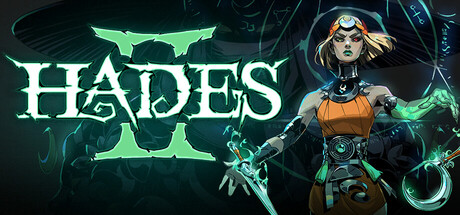
Supergiant keeps proving it has the finest art direction in independent games. Characters are hand-drawn with meticulous linework, magic effects glow in the witchy purple-blue palette, and Chronos looms over the battlefield like a gleaming golden machine. Darren Korb’s score — the signature rock-fused Greek folk — gains new depth here, with boss tracks featuring powerful vocals. The voice cast sees returning favorites like Logan Cunningham, who alone voiced Zeus, Poseidon, and Hades in the first game and now adds Chronos to the list; he remains the emotional anchor of the whole production.
Long-Term Experience
Hades II is enormous for a roguelike: multiple story epilogues, a familiar-companion track, a roster of NPCs each with their own agendas, plus the Altar of Ashes area for self-imposed challenges. The Vow system lets you tune difficulty up or down on individual dimensions to balance risk against reward, and hardcore players get the Fear-based challenges — brutal adjustments for the already-optimized. All told, you can easily sink 100+ hours before touching everything the endgame offers.
Verdict
Hades II is a persuasive answer to the question of whether a sequel was needed when the original was already near-perfect: not only was it needed — it does more. For those who loved Hades, this is a homecoming worth the wait; for newcomers, it’s the most beautiful, accessible, and emotionally rich gateway to modern roguelikes you can find.
Pros
- Arcana Cards and a wider weapon roster let you shape a genuinely different build every run.
- Every death advances the story, making failure part of the experience instead of a punishment.
- Art, music, and voice work at the level of a top-tier animated feature.
- Deep endgame — Vows, Incidents, and a second full storyline — keeps you busy for hundreds of hours.
Cons
- The inherently repetitive roguelike room structure grows familiar after enough hours.
- Mid-act progression pacing occasionally slows compared to the early game.