Baldur's Gate 3
The high-water mark of modern RPGs: near-total freedom of choice, a deeply written cast, and unrepeatable co-op — the game every future RPG will be measured against.
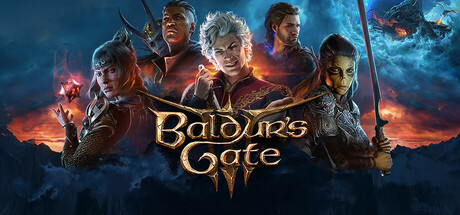
Overview
One detail sums up Baldur’s Gate 3’s ambition better than any praise could: in the opening scene, a mind flayer implants a parasitic tadpole into your eye, and for the hundreds of hours that follow, it keeps complaining, chiming in, and commenting on every decision you make. Before you can process what just happened, you’re aboard the Nautiloid flying over the city of Baldur’s Gate, racing to get the tadpole out before it transforms you.
Baldur’s Gate 3 is a nearly complete translation of the Dungeons & Dragons 5th Edition tabletop system into video game form, built by Larian Studios — the team behind Divinity: Original Sin 2 — after three years in early access. Unlike RPGs that merely borrow Faerûn as wallpaper, Larian packed in the whole tabletop rulebook: attributes, skill checks, spell slots, classes, subclasses, and dice rolls displayed right on screen — including the natural 1 that turns your diplomatic negotiation into a bloodbath.
Gameplay Highlights
The gameplay is two interlocking layers: world exploration and turn-based combat. Combat is where the D&D ruleset shines: each turn you move across a tactical grid and spend an action, a bonus action, and free interactions. Because D&D 5e favors creative options over optimal numbers, fights constantly reward ingenuity: flipping a table onto an enemy, shoving a foe off a cliff instead of whittling it down, or casting Speak with Dead to ask a corpse where the dungeon entrance is. The philosophy of “players will think of things we never anticipated” is Larian’s answered by allowing nearly everything — pouring oil across the floor to spread fire, stacking crates to climb a wall, throwing an ally across a chasm. Before long, these tricks become second nature.
But the pinnacle of Baldur’s Gate 3 is how reactive the world is. Every conversation offers choices shaped by your class, background, and skills; a Paladin negotiates completely differently than a Bard working a room, and a successful persuasion check can end an encounter without drawing a sword. The main story spans three large acts, but the paths between them branch into hundreds of variations — including whether you lean on the tadpole’s power or fight against it. The consequences are real: kill the wrong NPC, fail a critical check, and companions may leave the party or turn on you. This is why each replay feels genuinely distinct, not just a build swap.
Four-player co-op lifts it to another plane entirely: all four players enter the same conversation with their own vote — one person persuades while another draws a sword — turning every session into a comedy-drama no writer could script in advance. The community showered BG3 with 2023 Game of the Year awards, and nearly all of them were deserved.
Graphics and Sound
Larian built Baldur’s Gate 3 on detailed character models with facial animations that track every dramatic beat, keeping even hours-long conversations from going stale. Cutscenes are staged cinematically, especially in Act III when the city of Baldur’s Gate opens up with a Lower City dense with NPCs and stacked quest lines. Borislav Slavov’s score and the voice acting deserve special mention: the companions are voiced so well that many players admit choosing party members for their voices alone.
Long-Term Experience
A single run takes around 75 hours if you rush the main path, but that’s just one version of the story. Replay with a different class, different allegiances, different routes — each pass is a new tale. Honour Mode, with a single save for the entire journey, is the ultimate test for the confident, while the robust PC modding scene extends the game’s lifespan almost indefinitely. More than two years after launch, players are still discovering new interactions between items, classes, and NPCs that Larian planted long ago.
Verdict
Baldur’s Gate 3 is what fully executed ambition looks like: a complete D&D 5e adaptation that respects players’ intelligence and trusts them with absolute freedom. It’s not without minor bugs, but overall, this is the game that will make the community ask of every new RPG release: “BG3 already did this — what does this one do better?”
Pros
- Faithful adaptation of the D&D 5e ruleset, disastrous dice rolls included, right on screen.
- Every story choice has real consequences — you can kill key NPCs and the story still finds a way forward.
- A companion cast written with rare depth; every one is worth investing in.
- Four-player co-op produces chaos no other game can replicate.
Cons
- Turn-based tactics and D&D rules can overwhelm genre newcomers.
- PS5/Xbox versions launched with item sync and rare-but-infuriating save bugs.