Among Us
A brilliant party game when you have the crew and the laughs, but thin content means the magic fades fast without a regular group.
Overview
Among Us is the social deduction game from three-person studio Innersloth that launched quietly in 2018 and then detonated into a global phenomenon in mid-2020 when mega-streamers like Ninja, PewDiePie, and xQc picked it up. At its peak it passed half a billion downloads, becoming one of the defining games of the pandemic era — and the source of endless “sus” memes across the internet.
The setting is a spaceship or space station where a small crew works to complete tasks and keep things running. Sounds harmless? The problem is that one to three of them are Impostors — shapeshifting aliens disguised as crewmates — tasked with killing everyone without getting caught.
Gameplay Highlights
A round of Among Us follows a loop: crewmates complete tasks (fixing wiring, emptying trash, swiping cards, charting course) scattered across the map while the Impostor stalks, looks for isolated targets, slips through vents, and fabricates alibis. When a body is found, someone hits the emergency button, the group convenes, and the fiercest debate in gaming begins: who was where, who saw what, and who seems the most sus. Then comes the vote — the accused gets ejected into space, and if the group guessed right, the crew wins.
The task system is dead simple: small mini-games like sliding bars, connecting wires, entering codes. Innersloth’s genius is wrapping them inside a timeframe where a killer is walking free, so every time you bury your head in a task, you’re trusting a teammate to watch your back. That’s what lifts Among Us far above a loose collection of mini-games: every piece generates real tension.
Playing the Impostor is the real delicacy: you have to lie to the group’s face, pin the blame on others, even fake doing tasks to blend in. A great Impostor doesn’t need aim — they need acting skills and a sharp memory of who was where and who did what, weaponized against someone else’s testimony.
The maps are The Skeld (the classic spaceship), Mira HQ (the observatory tower), Polus (the frozen outpost), and the Airship (from the Henry Stickmin series, the largest and most multi-leveled). Each map shapes strategy: Mira HQ has no security cameras, and Polus’s open space makes proving innocence harder. A 2021 update raised the lobby cap to 15 and added support roles — Scientist, Engineer, Guardian Angel — each with a small ability that enriches the tactical layer.
The downside is how fragile the structure gets in public lobbies: rage-quitting when suspicion lands on you, speed hacks, and hostile chat. Innersloth has added accounts and chat moderation, but fundamentally Among Us is only “correct” in a private room with friends or a well-run community — the game’s lifespan depends entirely on whether you have a regular group.
Graphics and Sound
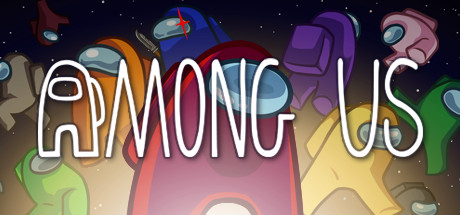
Among Us’s visuals are minimalist cartoon: adorable bean-shaped crewmates in bright colors — instantly recognizable, and technically nothing to write home about. The sound design, though, is used cleverly — footsteps, doors opening, and above all the heartbeat pounding as an Impostor closes in on a target build tension without any driving score. The menu music, meanwhile, became a meme hit all on its own.
Long-Term Experience
This is the game’s clearest weakness. After a few dozen hours you know every map and every common strategy, and without a regular friend group, public matches wear thin fast. Innersloth still updates the game — the Fungle map arrived in 2023, along with 15-player lobbies and new roles — but a three-person studio can’t match the viral scale the game once had. The long-term value lives in game nights with friends: Among Us is the party, not the main course.
Verdict
Among Us deserves a spot in the library of anyone with a friend group to play with, especially with the Steam price at about a cup of coffee and the mobile version completely free. If you mostly play solo with strangers, lower your expectations — the Impostor can kill you, but boredom will kill the game first.
Pros
- A simple social formula that produces unforgettable arguments and betrayals.
- Free on mobile and runs on anything, including old devices.
- Cross-play between PC and mobile makes getting the crew together easy.
Cons
- Public lobbies are plagued by griefers and rage-quitters.
- Thin maps and content get stale after a few dozen hours.
- No ranking system or filter for finding serious players.